
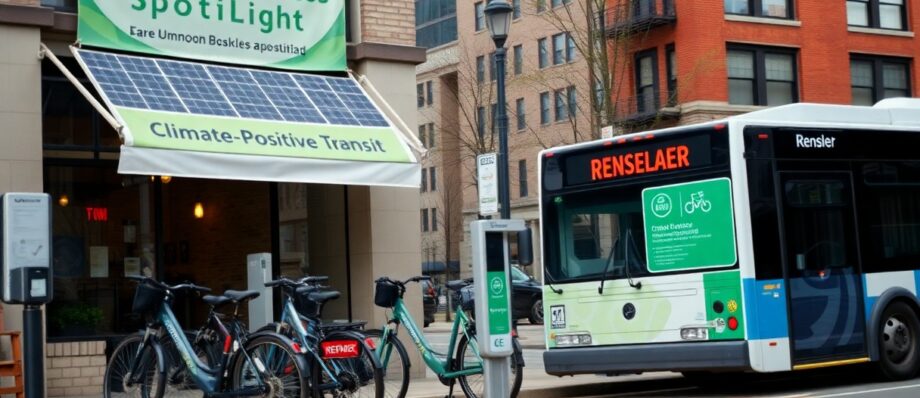
Rensselaer Green Business Spotlight – Supporting Local Climate-Positive Travel Initiatives
It’s possible to travel without leaving a long shadow on the planet, and in Rensselaer, a growing network of businesses proves that every journey can contribute to ecological renewal. You’re already rethinking how tourism intersects with sustainability, and here, climate-positive travel isn’t a distant ideal-it’s a practiced reality, rooted in community action and regenerative design.
The Verdant Spirit of Rensselaer
You experience Rensselaer’s ecological heartbeat in the canopy cover along the Hudson, where urban forestry initiatives have increased shade and reduced heat island effects since 2018. Community gardens occupy formerly vacant lots near 7th Street, transforming underused spaces into growing plots managed by neighborhood cooperatives. Bicyclists and pedestrians now make up over thirty percent of peak-hour traffic on newly expanded greenways, reflecting a measurable shift toward low-impact mobility. Local schools partner with environmental nonprofits to host seasonal wetland monitoring, embedding stewardship into civic life. These efforts form a living network, not a checklist, where every planted tree or restored habitat corridor responds directly to the region’s climate resilience goals.
Principles of Conscious Wandering
You move with intention when exploring Rensselaer’s green corridors, choosing paths that honor the land’s rhythm. Each step supports local conservation efforts, whether you’re pausing at a community garden in South Troy or biking the Hudson River Way. You carry out waste, respect trail hours, and favor locally run eco-tours over high-impact attractions. Your presence becomes part of the restoration, not a burden on it.
Local Stewards of the Soil
You walk paths shaped by farmers who rotate cover crops to rebuild organic matter, their fields bordering restored wetlands where native pollinators now thrive. These landholders, many practicing regenerative techniques for over a decade, host seasonal soil health workshops open to visitors. A mid-sized SaaS firm recently rerouted its team retreat through one such farm, integrating a composting demo into its agenda. Their collaboration reduced food waste by half across three events. Soil tests from 2022 show a measurable increase in carbon sequestration on participating plots, visible in darker, denser topsoil layers examined during public tours.
The Economy of the Living Earth
You support farms that rotate crops by season, not market demand, preserving soil integrity over yield spikes. When you buy a jar of honey from a roadside stand near the Apalachicola River, you fund pollinator corridors that stretch for miles. Your lodging choice-family-run eco-cabins powered by solar arrays-keeps land undeveloped and waterways monitored. These transactions form a quiet economy, one where value flows not just to balance sheets but to root systems, bird migrations, and generational care. A mid-sized SaaS firm recently redirected its annual retreat budget to sponsor trail restoration, proving scalability isn’t the only path to impact.
Footprints Left in Kind
You leave behind more than impressions when you travel through Rensselaer with intention. Each dollar spent at a farmer’s market stall supports a family growing heirloom tomatoes without synthetic inputs. Your choice to bike the Hudson River Way keeps emissions low and funds trail maintenance through local advocacy memberships. Even your quiet presence on a guided forest meditation reinforces the value of preserving green space over development. These acts accumulate not as offsets but as active contributions, shaping a culture where care for place becomes routine. A guest who stays at the eco-certified inn on 5th Street participates in a linen reuse program that has saved over 120,000 gallons of water in two years. Your behavior, repeated across visitors, forms the backbone of a living reciprocity-giving back in ways that outlast your stay.
Final Words
You support measurable climate action each time you choose a Rensselaer green-certified tour operator or eco-accommodation. These businesses reinvest in native reforestation, reduce single-use plastics across services, and prioritize low-impact transport options. Your travel decisions directly fund community science projects like the Hudson River Water Quality Monitoring Initiative. This network of local efforts ensures your presence strengthens the region’s ecological resilience, not its strain.

