
Top Resources For Conducting A New York Business Search Effectively
Resources like the New York Department of State database, county clerk records, and commercial databases help you verify filings, ownership, and status quickly, while public filings and news archives provide context for due diligence.
Key Takeaways:
- New York Department of State Division of Corporations’ online Entity Search provides official formation records, filing history, and current status for businesses registered in New York.
- County clerk offices, city licensing databases, and the New York State Unified Court System reveal DBAs, local permits, and litigation that state searches may not show.
- Commercial databases such as Dun & Bradstreet, LexisNexis, and Westlaw plus the USPTO TESS trademark search help verify ownership, credit history, and intellectual property.
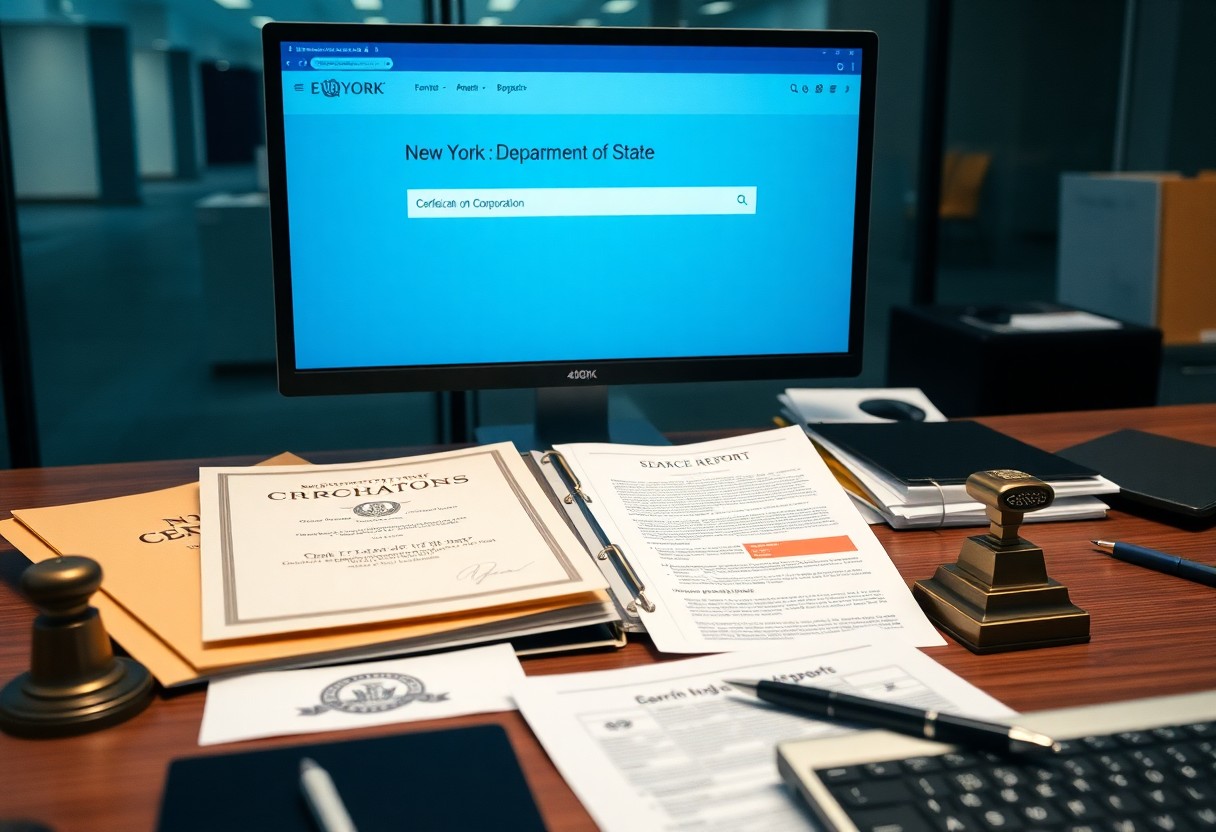
New York Department of State Division of Corporations
Explore the New York Department of State Division of Corporations website where you can access entity filings, officer details, and historical records for thorough verification.
Navigating the Corporation and Business Entity Database
Using the Corporation and Business Entity Database, you can search by name or DOS ID, filter results, view filing histories, and export details for due diligence.
Interpreting Entity Status and Service of Process Information
Check entity status to confirm active, dissolved, or suspended standing, and verify the registered agent listed for service of process and delivery addresses.
Confirm whether agents accept service, review recent administrative filings for noncompliance or appointment changes, and note expiration or out-of-state filings that affect legal delivery.
County Clerk and Local Government Registries
County clerks and local registries hold filings and ownership records you can search online or in person; check county websites for indexes, request certified copies, and note recording dates to confirm status.
Searching Certificates of Assumed Name (DBAs)
DBA records show assumed names filed with the county or state; you can verify owner names, filing dates, and whether the name is active by searching county clerk databases.
Accessing Local Business Licenses and Permits
Licenses and permit records show types, expiration dates, and compliance; you can contact municipal clerks or check online portals for trade, health, zoning, and signage permits.
Municipal clerks often maintain searchable databases and fee schedules; you should request permit files, inspection records, and any complaint history to assess compliance and scope of authorized activities.
Professional and Occupational Licensing Portals
Licensing portals centralize board records, allowing you to confirm licenses, expiration dates and disciplinary actions quickly through state databases.
Verifying Credentials through the NYSED Office of the Professions
NYSED lets you look up licensed professionals, verify education and license status, and view enforcement records via its online registry.
Checking Specialized Industry Regulatory Status
Regulatory agencies like the Department of State, Department of Health and the Public Service Commission maintain searchable records you can use to confirm permits, certificates and compliance histories.
When checking records, match business names to exact license numbers, note active versus inactive statuses, and reach out to agencies for archived or disputed records to ensure accuracy.
New York State Department of Taxation and Finance
New York’s Department of Taxation and Finance offers online tools and records you can use to verify tax status, filings, vendor registration, and lien information when vetting a business.
Confirming Sales Tax Vendor Authorization
Check the Department’s Certificate of Authority lookup so you can confirm whether a seller is authorized to collect sales tax and whether their registration is active or suspended.
Researching Tax Warrant and Lien Records
Search the Department’s warrant and lien databases to see if you can find outstanding tax warrants, judgments, or liens that affect a business’s financial standing.
When you research warrants and liens, filter by taxpayer name, EIN, or docket number, review filing dates and amounts, and download supporting documents to confirm status. Look for release or satisfaction notices, note pending collection actions, and contact the Department’s collections unit for clarifying records or payment history to assess how liens may affect transactions or due diligence.
Uniform Commercial Code (UCC) and Financial Filings
UCC filings help you identify secured creditors and lien history; use the New York Department of State and county clerk records to confirm filings, terminations, and collateral descriptions that affect business ownership and credit exposure.
Investigating Secured Transaction Records
Search county clerk and DOS UCC indexes to find liens, cross-check filing numbers, and verify priority; you should note termination dates and debtor names for accuracy.
Analyzing Business Credit and Financial Standing
Assess credit reports, Dun & Bradstreet scores, and public financial statements so you can gauge payment history, defaults, and debt levels that influence lending and partnership decisions.
Compare trade-credit references, bank lines, UCC filings, court dockets, and tax liens so you can spot payment trends or disputed claims; calculate coverage ratios and review recent cash-flow statements to form a calibrated view of creditworthiness and operational stability.
Legal Proceedings and Court Record Databases
Court records reveal litigation, liens, and judgments tied to a business; you should consult online databases and clerk offices to assess legal risks quickly and accurately.
Utilizing the New York State Unified Court System (UCS)
Access the UCS eCourts portal so you can search dockets, view filings, and confirm case statuses by party or business name; use filters to narrow results and download documents.
Reviewing Civil Litigation and Judgment History
Examine civil dockets and county judgment indexes to spot past lawsuits, settlements, and monetary judgments against the company; you should cross-check dates and amounts for accuracy.
Confirm whether judgments are satisfied, withdrawn, or still enforceable; you should check county clerk records, credit reports, and UCC filings to build a complete liability picture.
Summing up
Drawing together the state Division of Corporations, county clerk records, UCC filings, business credit services, and professional databases gives you a comprehensive toolkit to verify entity status, ownership, and filings quickly and accurately.
FAQ
Q: What official New York government resources should I use to verify a business’s legal status and filings?
A: Use the New York Department of State, Division of Corporations (Corporation & Business Entity Database) to search by exact business name or DOS ID and to view entity type, current status (active, dissolved, etc.), filing history, registered agent, and officer names. Request certificates of status or certified copies for legal proof; those services often carry fees. Check county clerk offices for UCC filings, judgments, and recorded liens tied to a business’s local address; many county clerks offer online search portals. Search the New York State Unified Court System (eCourts) and PACER for state and federal litigation records involving the business or its principals. For tax or licensing issues, consult the New York State Department of Taxation and Finance and the appropriate municipal licensing agency (for New York City, the Department of Consumer and Worker Protection, Department of Buildings, or Department of Finance depending on the license or permit type). Public company filers should be checked on the SEC’s EDGAR system; nonprofit filings can be reviewed via IRS Form 990 databases such as GuideStar.
Q: Which commercial databases and online tools provide deeper or faster business intelligence for New York entities?
A: Use LexisNexis or Westlaw for comprehensive legal, litigation, and regulatory searches that include case law, filings, and news. Use Dun & Bradstreet, Bloomberg, S&P Capital IQ, or FactSet for credit, financial profiles, and corporate linkage data on larger or public firms. OpenCorporates and Bizapedia provide aggregated corporate registry data and alternative name matches. Use PACER for federal court dockets and local county clerk portals for state-level filings. Google Maps, company websites, LinkedIn, and the Better Business Bureau help confirm physical operations, management, and customer feedback. Consider subscription-based risk tools that include sanctions, adverse media, and beneficial ownership screening when conducting enhanced due diligence.
Q: What practical search techniques and verification steps produce reliable results and reduce common errors?
A: Start searches with the entity’s exact legal name and then run variations, abbreviations, and common misspellings to catch DBAs and trade names. Cross-check the DOS Entity ID and filing history to confirm formation date, jurisdiction, and current status. Match registered agent name and business address against county records and UCC filings to reveal liens or secured creditors. Verify officer and director names against corporate filings and court records to uncover litigation or judgments. Obtain certified documents for transactions that require legal proof. Use multiple independent sources (state registry, county clerk, court records, commercial databases) to confirm key facts before relying on them. Maintain records of search dates and search terms to support audit trails and repeat searches when recent filings or status changes are suspected.


FrankGrimsley
August 1, 2026Wow, this is incredibly detailed and super useful for anyone trying to navigate business research in New York! It reminds me a bit of how intricate some game systems can get. For example, I’ve been playing a lot of Infinite Craft lately, just to see how wild the crafting combinations can get-like mixing totally random elements to create something unexpected. It’s that same thrill of digging through layers to find exactly what you’re looking for, or sometimes, something even better. This guide provides such clear pathways to resources. Do you think there are common pitfalls people fall into when interpreting these different business statuses (active, dissolved, suspended)?